
Paper is a liability. It gets lost, it can't be searched, it takes up space, and it slows down every process it touches. Companies that have digitized their documents operate faster, spend less on storage, collaborate more effectively, and carry far less compliance risk than those still running on physical files.
The shift isn't complicated, but it does require doing it right. Digitizing documents means more than scanning and saving, it means building a system that's legally compliant, secure, and usable by the people who need it. Done well, it removes one of the most persistent drags on operational efficiency and sets the foundation for a genuinely paperless operation.
What digitizing documents actually means
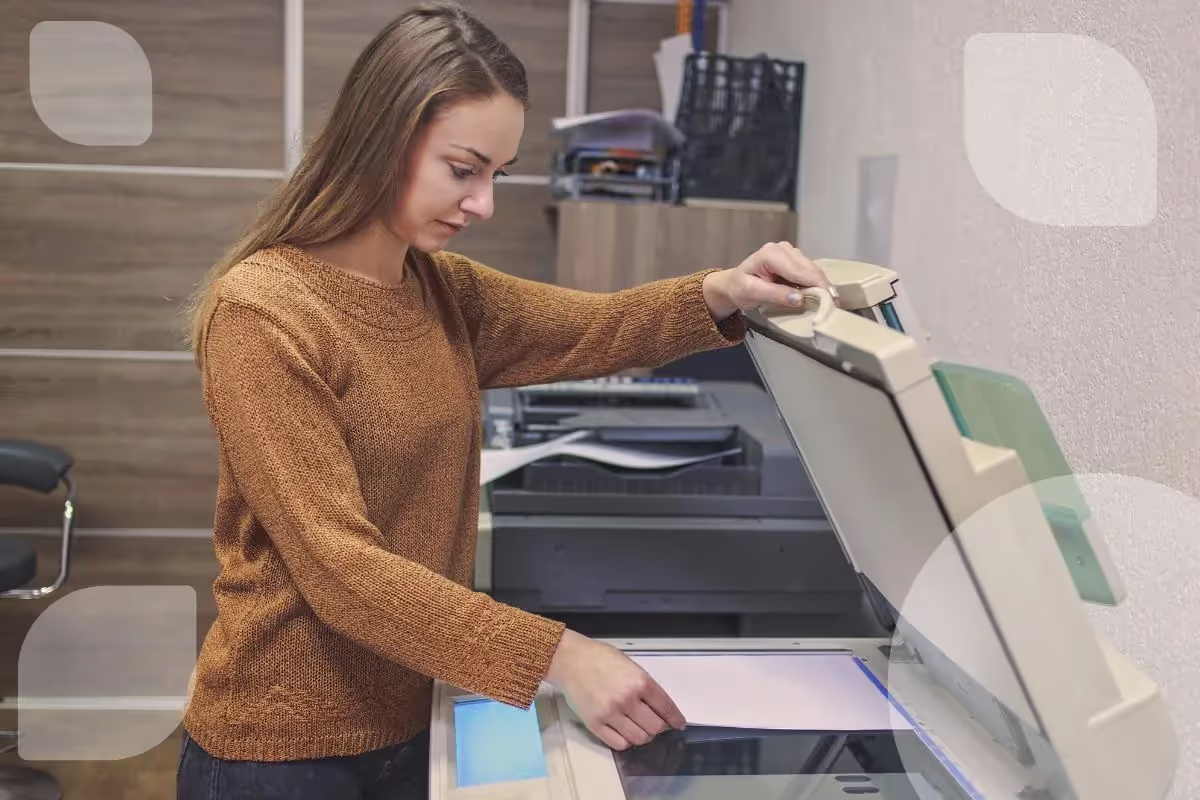
Document digitization is the process of converting physical paper documents into electronic formats and storing them in digital databases or archives. Scanners and specialized software handle the conversion, transforming paper into searchable, accessible digital files.
The value isn't just in having digital copies, it's in what becomes possible once documents are digital. Instant search, remote access, automated workflows, version control, and audit trails are all downstream benefits of a well-implemented document digitization system.
Why it's worth doing now
The efficiency gains from digitizing documents are immediate. Finding a specific document takes seconds instead of minutes or hours. Physical storage costs, filing cabinets, off-site archiving, paper and printing, drop significantly. Collaboration becomes frictionless because documents are accessible to everyone who needs them, from anywhere, at the same time.
Security improves too. Digital documents can be encrypted, access-controlled, and backed up automatically. The risk of physical loss, a misfiled folder, a damaged archive, a document that walked out the door, disappears. And from an environmental standpoint, reducing paper consumption is a straightforward sustainability win that compounds as the business grows.
What you can digitize, and what you can't
Almost every document type that companies generate daily can be digitized. Business letters and customer correspondence, project folders and internal guidelines, customer records, personnel files, invoices, delivery notes, payslips, and contracts are all candidates for digital archiving.
There are exceptions. Some documents are legally required to be retained in paper form, including trading books, inventories, notarial documents, and certain contracts that must be signed in the original. Before digitizing any document category, verify the retention requirements that apply to your industry and jurisdiction.
The legal requirements you can't skip
Digitizing documents without meeting the relevant legal standards creates compliance risk that can outweigh any efficiency gain. Four areas deserve careful attention.
GoBD compliance governs how electronic documents must be recorded, stored, and archived in Germany. This includes adhering to retention periods, ensuring changes are traceable, and guaranteeing that documents cannot be altered after the fact.
Audit security requires that digital documents are immutable once created. Digital signatures and timestamps are the standard mechanisms for ensuring this.
GDPR compliance applies whenever personal data is involved. Data economy, purpose limitation, transparency, and appropriate security measures are all requirements when processing personal information in digital form.
Beyond regulatory compliance, practical security measures, encryption, access controls, and regular security audits, are essential to protect the confidentiality and integrity of your document archive.
What to look for in document management software
Not all document management tools are built equally. The core functionality you need includes the ability to scan, index, search, and archive documents, but that's the baseline. The features that actually determine whether a system works for your business in practice are scalability as you grow, automation capabilities that remove manual handling from routine document workflows, integration with the tools your business already runs on, role-based access controls that keep sensitive documents protected while keeping collaborative documents accessible, and servers with GDPR-compliant data locations.
How Ninox powers the paperless office
Ninox gives you a complete platform for digitizing documents and the processes around them. Trigger-based automations eliminate manual steps in document handling. Data accuracy is maintained because the same information doesn't need to be entered multiple times across different systems. Integration with existing tools means Ninox fits into your current stack rather than displacing it. And the platform scales with your business, so you're not re-platforming every time your needs grow.
Build your document structure from the ground up using the visual editor, no programming knowledge required. Define your fields, configure your logic, and extend it as your processes evolve. All data is stored on GDPR-compliant servers, so legal compliance is handled at the infrastructure level.
The paper era is over
The companies still running on physical documents aren't just inefficient, they're carrying risk and cost that their digitized competitors have already eliminated. The technology to make the shift is accessible, the legal framework is clear, and the return on investment is fast.
Digitizing your documents is one of the highest-leverage operational changes a business can make. The upfront effort is finite. The compounding benefits, in time saved, costs reduced, and risk removed, run indefinitely.
Ready to go paperless? Start building for free. No credit card required.