
If you have ever wished you could build a tool for your business without knowing how to code, a low-code platform is the answer. And before you close this tab thinking this is not for you, hear me out. It is software development with most of the complexity removed, where you assemble applications by clicking, dragging, and dropping instead of writing code. That is the core promise of low-code, and it is one the industry is delivering on at scale.
So, what exactly is low-code? Let me break it down.
You know how building with blocks works? You have the blocks, you have a picture of what you want to make, and you just start snapping things together. Traditional software development is nothing like that. It means writing instructions in a programming language, line by line, until the application does what you need. Most people do not have the time or the training to do that, and honestly, they should not have to.
A low-code platform replaces most of that with a visual builder. You see the components on screen, you drag them into place, you connect them to your data, and the platform handles the underlying code automatically in the background.
Want a form that captures customer inquiries and stores them in a table? Drag a form onto the canvas, connect it to a table, set your fields. Want an automation that sends a notification when a record changes? Configure a trigger, define the condition, pick the action.
Now here is where people sometimes get confused. "Low-code" and "no-code" are not the same thing. No-code is for people who want zero technical involvement whatsoever. Low-code is the middle ground: approachable enough for a non-technical operations manager, flexible enough for a developer who wants to move faster. Think of it as having training wheels that you can remove when you are ready, not ones that are welded permanently.
Why are so many businesses making the switch?
Let me give you my perspective: because the old way of getting software built is broken for most businesses.
You need a tool. You submit a request to IT. IT is buried under six other projects. Three months later, you get a version of what you asked for that no longer fits the problem. Sound familiar? That is the traditional development cycle, and it is the reason 84 percent of enterprises have turned to low-code specifically for its ability to reduce strain on IT resources, increase speed to market, and involve the business directly in digital asset development.
The people closest to the problem are now building the solution, and THAT is a big deal.
The market agrees. The low-code development platform market is valued at between $26 and $50 billion in 2025, growing at 20 to 33 percent annually, with 78 percent of Fortune 500 companies already deploying low-code in mission-critical systems. This is not a trend chasing its own tail. It is a structural shift in how businesses build the tools they need to operate.
But what can you build with it? More than you think.
This is usually where people are most surprised, so let me be specific.
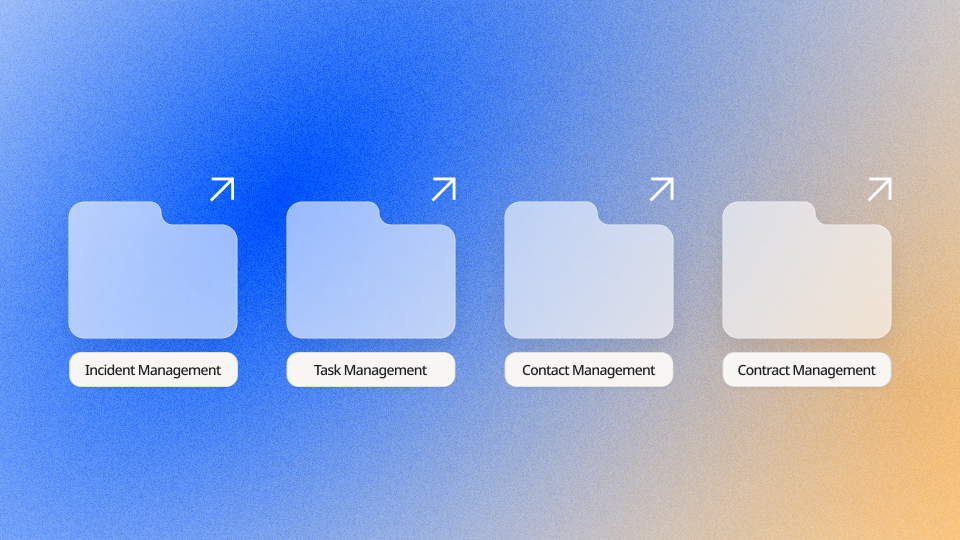
Teams use low-code platforms to build inventory management systems, custom CRMs, HR onboarding workflows, project tracking tools, invoice generation pipelines, and approval chains. If your business has a process that involves data moving between people, a this type of platform can automate and structure it properly.
And here is the part that really matters to you my dear reader: you do not have to build it perfectly on day one. Because everything in this kind of platform is visual and modular, you can go back and adjust it without breaking what already works. That is what makes it genuinely agile, not just fast at the initial build.
A good low-code platform will let non-technical users handle the everyday building and modification, while giving more technical users a scripting layer for logic that goes beyond point-and-click. You do not have to choose between accessible and powerful. You get both.
Okay, so where does Ninox come in?
Ninox is an AI-native low-code platform that covers the use cases we have been talking about. Your team builds custom databases, workflows, and interfaces through a visual builder. Automations trigger on data changes. Documents generate directly from live records. Role-based permissions mean each person sees exactly what they need and nothing they should not.
There is also an AI layer that helps with building. Describe what you need in plain language, and Ninox will give you a starting point to work from. It is not magic, but it does lower the barrier for teams that are just getting started.
If you want to go deeper on the technical definition and where low-code came from, our earlier post on what low-code is and why it matters covers that ground.
Where to start?
Here is my recommendation: stop reading about it and go use it. Pick one process in your business that lives in a spreadsheet or someone's email inbox and build a proper home for it. You will learn more in five minutes of building than in three hours of research.
Ninox has a free tier with no time limit. Try it for free. Build something real, see how it fits, and only move your system over if it earns your trust.