
Every time you check a bank balance, order takeout, or scroll through old messages, you're shipping a request straight into a database, even though you'll never see it happen. A database management system, or DBMS, is the software layer that stores, organizes, and retrieves data on behalf of every app and website you touch. It's unglamorous by design. When it's humming along, nobody notices. When it goes down, it makes headlines, and the postmortem writes itself.
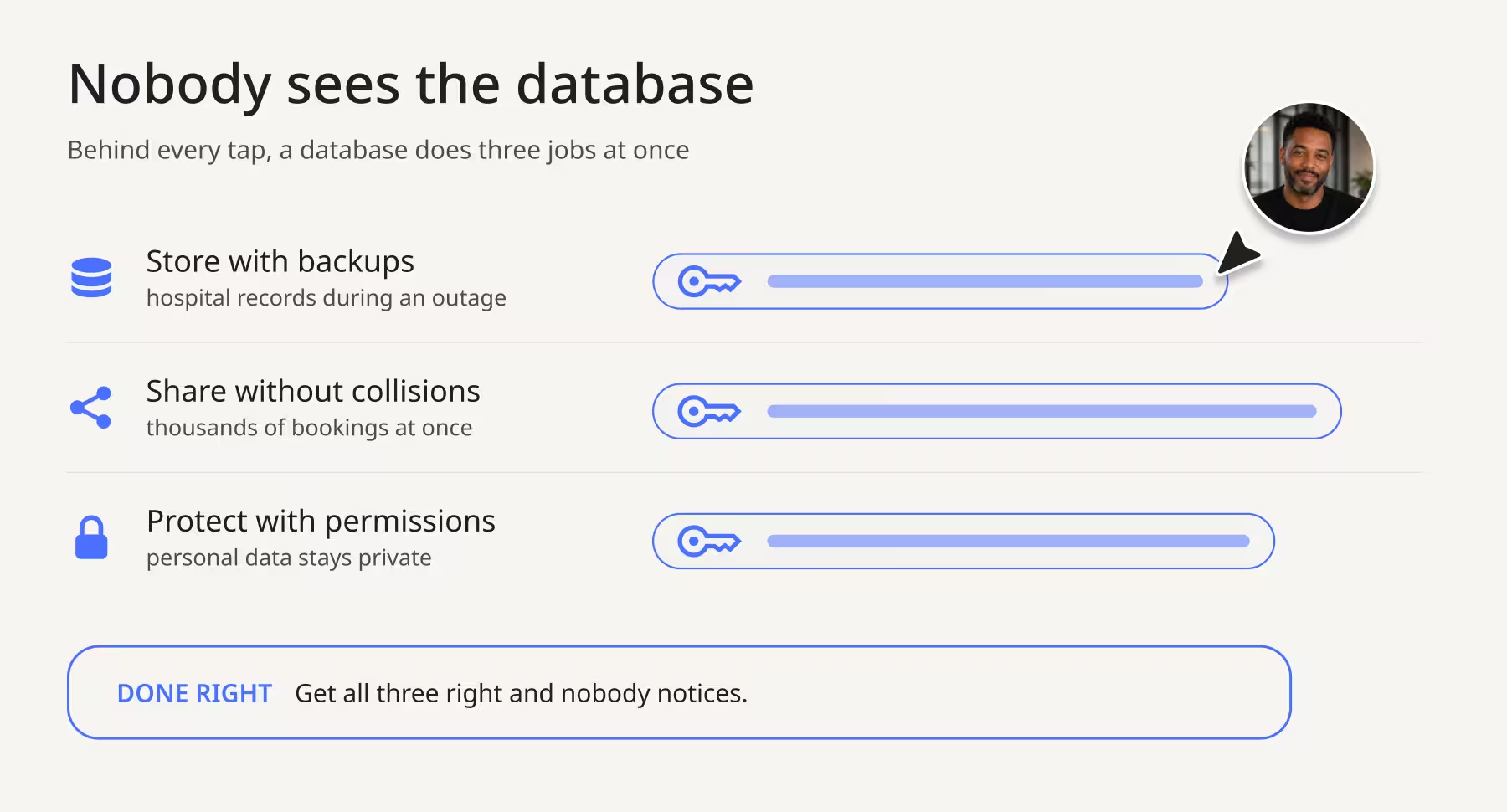
Staying out of the headlines comes down to three jobs running in parallel, as the infographic below shows.
What exactly is a database management system?
Strip away the buzzwords and this kind of database does three jobs: it stores information reliably, it lets many people and programs read and write that information at once without stepping on each other's toes, and it protects that information from being lost, corrupted, or seen by the wrong eyes. Under the hood, that means handling concurrent transactions, backups, indexing for fast lookups, and permissions that decide who gets access and who doesn't.
Relational systems like PostgreSQL and MySQL organize data into tables with strict rules, which is why banks and hospitals still build on them. NoSQL systems, including document and graph databases, trade some of that rigidity for flexibility, which suits apps juggling messy, fast-moving data like social feeds or sensor streams. Most companies running at scale end up with several kinds side by side, choosing the right tool for the job instead of forcing every workload through one system.
When the system behind the curtain fails
It's easy to treat a database as invisible plumbing until it breaks, and then it becomes front-page news. In 2018, The Guardian revealed that a political consulting firm had harvested tens of millions of Facebook profiles without users' consent, a story that showed just how much personal data sits inside corporate databases and how little control people have over it once it's stored. The scandal reshaped the public conversation around data privacy and got lawmakers everywhere scrutinizing how companies handle information they were trusted with.
A very different kind of database mishap made headlines more recently, and it's a reminder that even the biggest names can make a mess. Dark Reading reported that a major media company's internal source code repositories had been exposed after a cloud access credential leaked, and sitting inside that trove was a database containing the names, emails, and passwords of roughly 1,500 users. This wasn't some elite hacking crew breaking through a firewall. It came down to one overlooked access token left lying around, proof that a database is only as secure as the weakest credential guarding the door.
Both stories point to the same underlying truth: this type of database isn't a footnote buried in an architecture diagram. It's where the trust between a company and its users lives, and it only takes one slip to spill the whole thing.
The everyday stakes are higher than they look
Consider what rides on a well-run database management system. Hospitals need patient records available instantly, even during an outage. Airlines need seat assignments and fares to stay consistent across thousands of simultaneous bookings. Retailers need inventory counts that update in real time so a shopper isn't sold something that's already gone. None of that is possible without a system purpose-built to manage concurrency, integrity, and recovery at scale, which is exactly the job description of a DBMS.
That's also why the market for these systems keeps growing instead of flattening out. As more of daily life, from fitness trackers to smart thermostats, generates data that has to land somewhere, demand for sharper, more specialized databases keep climbing right along with it. Cloud-native and AI-assisted tooling is increasingly part of the stack, automating tasks like performance tuning and anomaly detection that used to require an admin watching dashboards around the clock. It's not about replacing engineers, it's about giving teams more leverage, and letting them focus on the roadmap instead of firefighting at 2 a.m.
The takeaway
A database management system rarely gets a mention outside of a standup or an architecture review, yet it decides whether your medical history is there when a doctor needs it, whether your bank statement checks out, and whether a stranger can quietly walk off with your personal information.
The next time a headline covers a data breach, or a company brags about "real-time insights" in its pitch deck, what's really being described is the health, or the failure, of a database management system working somewhere behind the scenes. Get that infrastructure right and nobody notices. Get it wrong, and you'll have a lot more than a bad sprint to answer for.
Let's figure it out together.