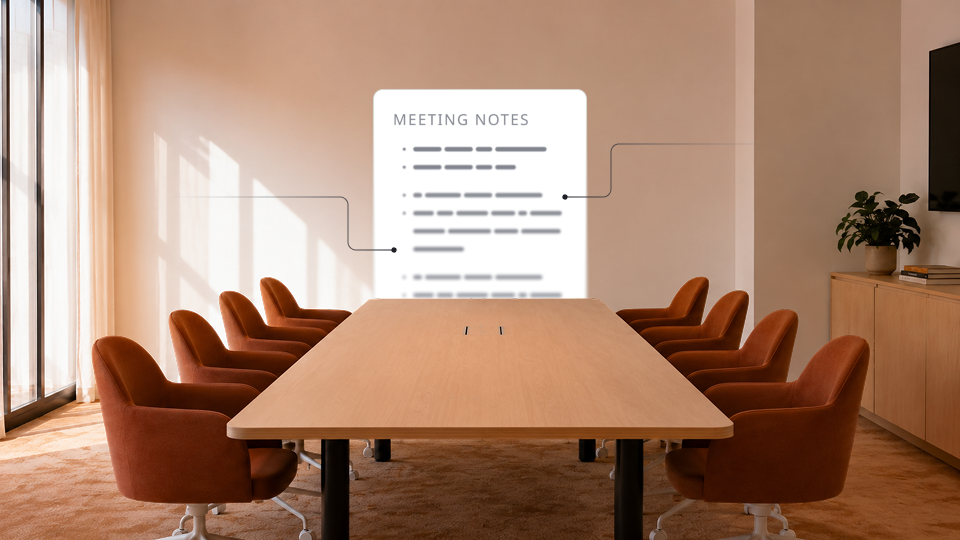
A meeting can produce a clear decision, a named owner and a real deadline, and the action item can still be dead within a week. Not because anyone stopped caring. Because the moment the meeting ends, that decision lives in a document nobody reopens, while the actual work happens somewhere else entirely, in inboxes, personal notebooks and half remembered conversations.
Minutes do one job well
Minutes are good at capturing what was discussed and decided in the room, in the moment, with everyone's memory still fresh. For a single decision that needs a written record somewhere, a minutes document does exactly what it is supposed to do.
The problem starts right after. Forbes revealed that only about half of meeting time is well spent, and that organizations rarely measure or follow up on what happens to a meeting's outcomes once the room clears. A document is not a system. Once the meeting ends, nobody is checking whether the action item three pages down got done, because the minutes were never built to track that. They were built to record that it was said.
Documenting a decision is not the same as executing one
A meeting minutes document proves a decision was made. It does not make anything happen after that. An action item written in a PDF has no owner reminded at the right time, no deadline that triggers a follow up, no visible status anyone can check without asking around. It sits there, technically documented, practically invisible.
That gap is where projects quietly slip. A structural review gets flagged in a Tuesday meeting, gets written into the minutes, and gets rediscovered three weeks later when the client asks why it never happened. No one on the team was careless. The system just never picked it up. Closing that gap is exactly what a low-code platform is built for, since it lets a firm shape the process around how a decision gets made instead of forcing it into a rigid template.
TechRadar found that the average worker is interrupted by an email, chat message or meeting roughly every two minutes. In that kind of noise, a decision that only lives in a document has almost no chance of surfacing again on its own.
A decision needs a place to live
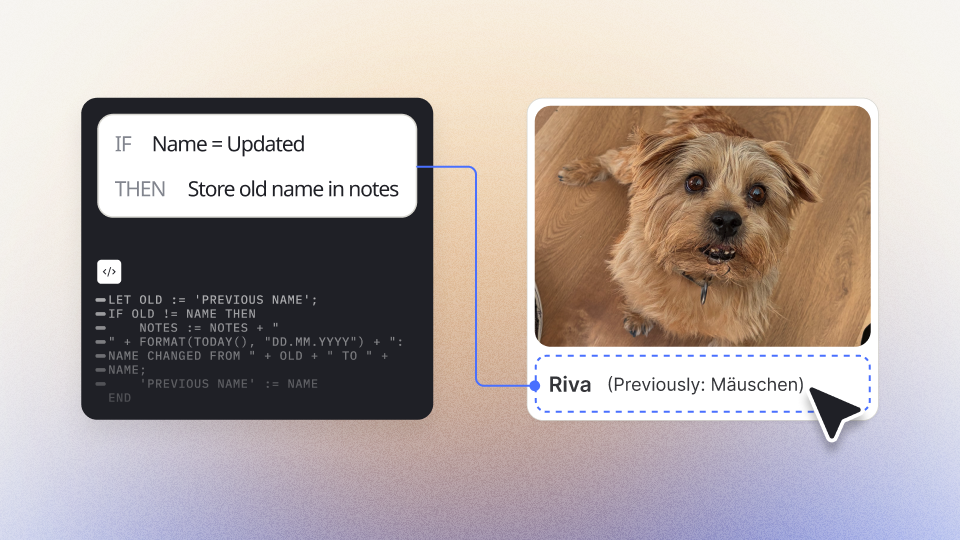
The fix is not a better minutes template. It is making sure what comes out of a meeting lands somewhere that keeps working after everyone leaves the room. Ninox is a low-code platform, so project managers can link meetings directly to project records, and a decision made in a discussion becomes a real entry with an owner, a deadline and a status, tied to the project it belongs to instead of floating in a separate document.
The data model behind it is built with a drag and drop builder and a scripting layer, so a flagged action can trigger a reminder to the right person automatically as its deadline gets close, and it shows up wherever that person already works, not buried three pages into a file only the meeting organizer opens. A manager checking in on Thursday sees exactly what is open, who owns it and how overdue it is, without digging through old notes. Every decision keeps its full history, attached to the meeting and the project it came from, so ownership is never a matter of memory.
The result is simple: a decision made in a meeting behaves the same way a task on the project plan does, because on a low-code platform, it is one.
The most avoided job in leadership
The problem is not unique to any one industry. The Harvard Business Review published that holding people accountable to what they committed to is the single most avoided behavior among executives, more than strategy, delegation or planning.
Meetings are where that avoidance shows up first. A decision gets made, everyone nods, and then no structure exists to make sure it happened. For engineering and architecture firms juggling parallel projects, closing that gap is not about running better meetings. It is about making sure a commitment, once made, has somewhere to live that keeps it visible until it is done.
Take the next step. Start building for free with Ninox.
Let's figure it out together.