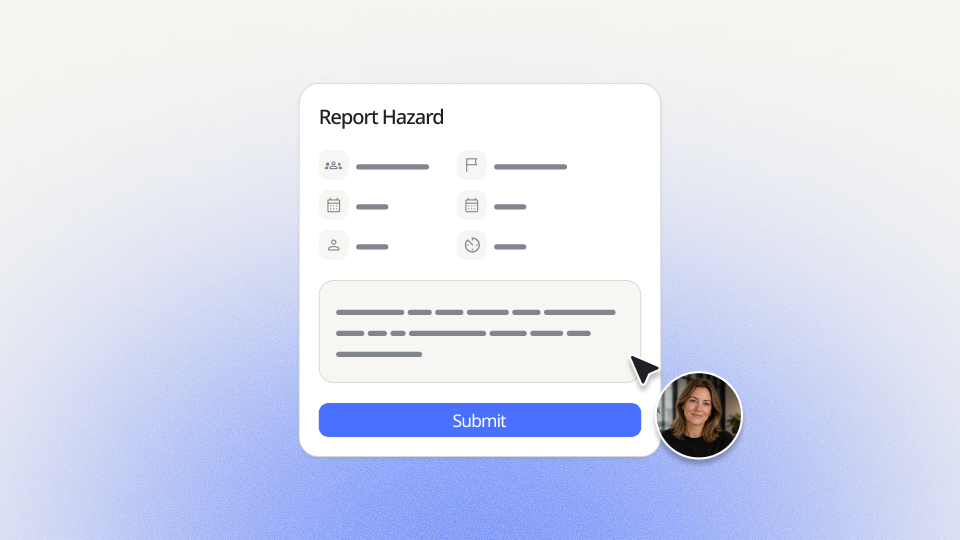
Software company, Ninox, is launching a new generation of its platform, built on an entirely new architecture with AI at its core. Rather than building applications manually, businesses can describe any application with ease in natural language and receive a working starting point complete with tables, fields and logic, all within seconds. Unlike applications generated through vibe coding, every aspect of the application can be traced, customized and extended via scripting, giving businesses full visibility and control over whatis created.
Today’s organizations have the power to create applications faster and more easily than ever before as AI rapidly lowers the barrier to software development. However, as technology evolves, businesses are faced with new challenges to retain visibility and control over what they build, and to ensure that any new applications are both secure and flexible for the future.
The next-generation platform builds on Ninox’s existing premise that no two businesses are alike. Software should reflect their specific needs, rather than be shackled to a one-size-fits-all approach. With this update, flexible and compatible applications can be built around those needs and existing systems, without requiring software development expertise.
We didn't just retrofit; we rethought the entire development process. Now, any employee at any level who can describe an application has the power to build it. Our focus is on helping businesses to continue doing what they do more efficiently by building AI into the core architecture.
Says Frank Böhmer, founder and CEO of Ninox.
What’s new is that AI is part of the platform from the outset: when getting started via text input, while building with an AI assistant, and for end users in the finished application. Administrators decide whether the AI is allowed to access records.In addition, email, calendar and document management are integrated directly into the same system as the business data. For mid-sized businesses, particularly those in manufacturing, professional services, healthcare, and construction, this addresses a common challenge: having to create bespoke pipelines, systems or applications to manage processes that cannot be supported by a standardized approach or off-the-shelf software.
Nils Henning,Solutions Engineer and Product Strategist at Ninox, explains:
Ninox was one of the first platforms to bring rapid application development to the web and mobile devices, long before the term ‘low-code’ caught on. As the company grew, the original technology started holding us back. At the same time, language models made enormous progress in code generation. That's exactly what we set out to bring together.The result of these evolutions is a platform that combines AI-driven speed with the transparency of low-code.