Vibe coding is having its moment. Andrej Karpathy, who co-founded and formerly worked at OpenAI, coined the term in February 2025 and by early 2026 a lot of code being written globally was AI-generated. The pitch is simple: describe what you want in plain language, let the AI build it, and ship. For a throwaway prototype or an MVP, that logic holds up. For the kind of software businesses run their operations on, it falls apart faster than you would think. Ninox is not a vibe-coding tool, and it was never meant to be.
The difference between a vibe and a system
Vibe coding optimizes for speed at the start. The tradeoff, and it is a real one, is what comes after. The bugs are not always visible on day one. They show up when the business grows, when a new person joins the team, or when something breaks in a workflow nobody fully understood in the first place. By then, the original vibe is long gone and nobody wants to touch the codebase.
That is the problem Ninox was built around. Not "how fast can you ship something" but "how long can a team actually run it, adapt it, and own it." Those are different questions, and they lead to a different kind of tool.
What makes Ninox distinct is not that it removes the need to think. It is that it puts the thinking in the right hands, the people who understand the process. A team can model their data, build their app, set up automations, and manage permissions, all within the same platform, all without writing code. When the process changes, they change the app.
Where the details start to matter
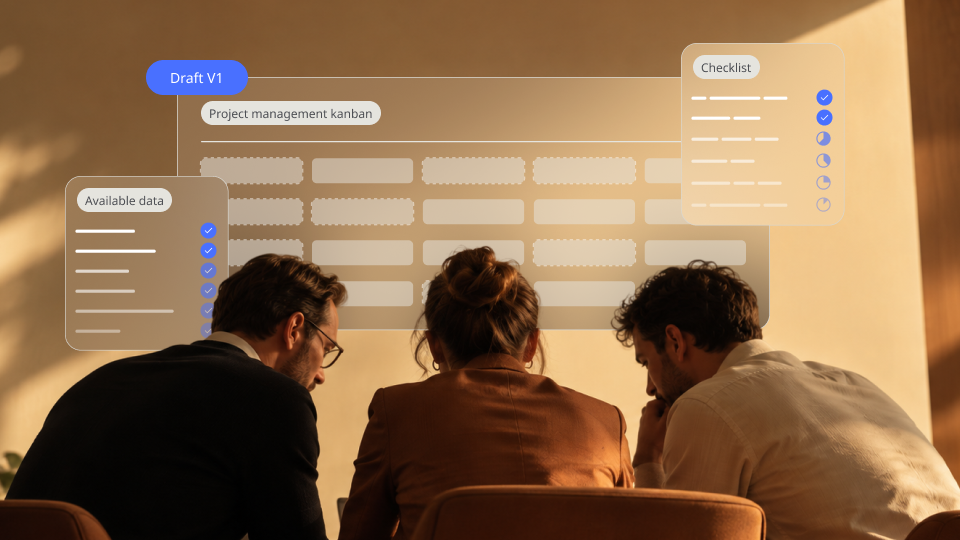
Field-level and record-level permissions that are enforced on the server, not just in the interface. Conditional logic that adapts what a user sees based on who they are and what they are looking at. Global functions that let a builder define a piece of logic once and use it consistently across the entire app, so when something changes, it changes everywhere. Kanban boards with script-driven card layouts. Custom components built with plain language or Ninox Script, directly on the page. A public REST API that can upsert records, execute scripts, and manage views, so Ninox sits inside a broader stack without friction.
None of that is glamorous. None of it is the kind of thing that makes a good demo clip. But it is the kind of thing that makes software that runs a business rather than just illustrating one.
The vibe-coding wave is real, and it is genuinely useful for the right problems. Getting your ducks in a row for a one-off internal tool, spinning up a proof of concept before a board meeting, building something that lives for a sprint and then gets replaced, those are fair use cases. But if you are building something your team will use every day, that needs to be reliable, auditable, and adaptable without calling in a developer every time a field changes, a vibe is not what you need.
The gap between usage and trust is exactly where Ninox operates. Not because it avoids AI, Ninox is AI-native from day one, but because it puts control where it belongs: with the people who understand the work.