Low-code companies love to talk about how fast their platform builds things. What you usually don’t hear about is why so many of those fast builds never make it past the pilot stage. The bottleneck in enterprise low-code adoption today has almost nothing to do with speed, and almost everything to do with whether IT can trust what business teams just built.
The speed story is true but it's not the whole story
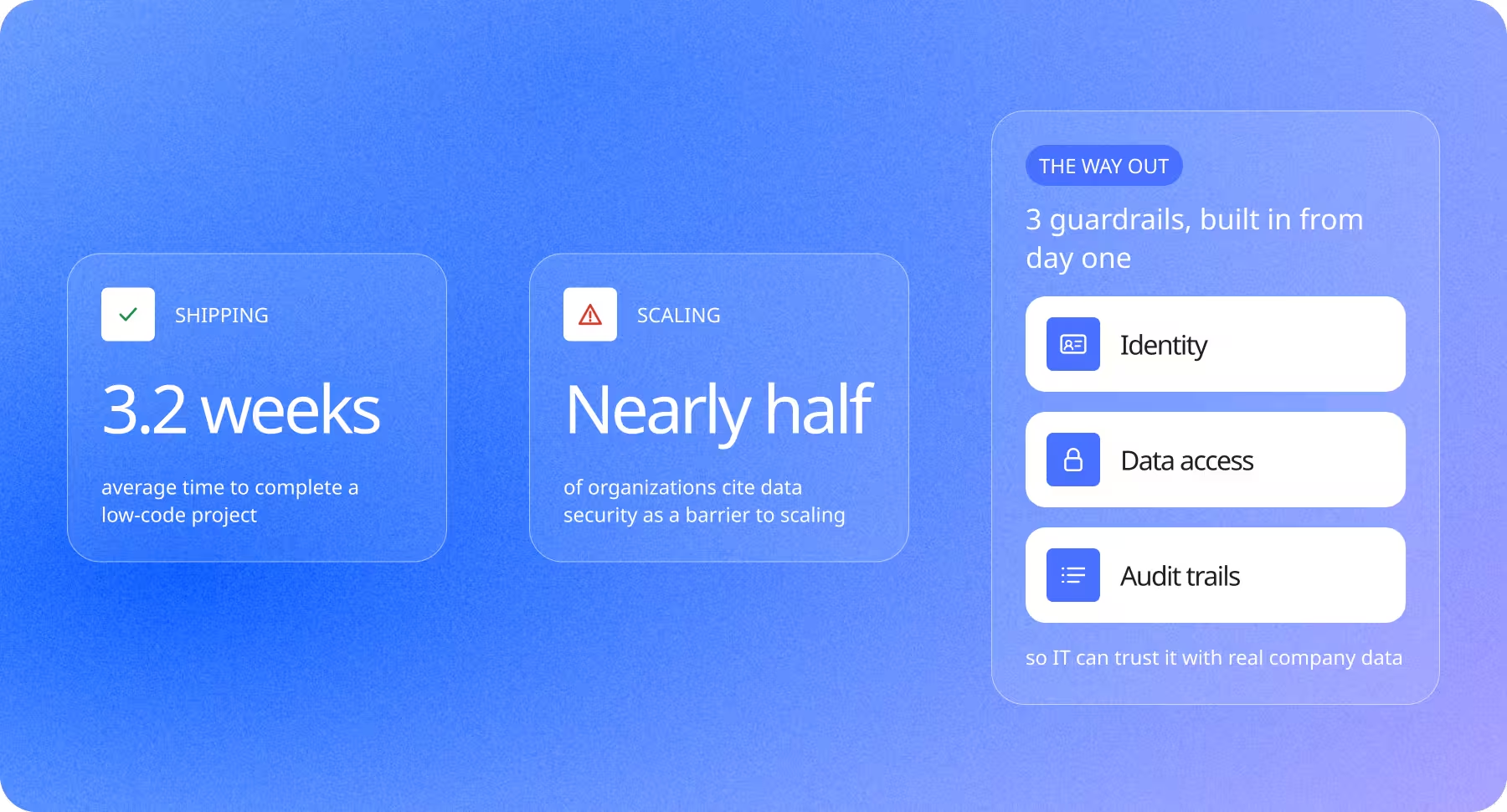
Give credit where it's due. Low-code earns its reputation fair and square. The average no-code or low-code project gets completed in roughly 3.2 weeks, compared to 14.8 weeks for an equivalent traditionally developed project, and that gap shows up across industries, not just in one favorable case study. For a narrow set of needs, internal tools, lightweight process apps, department level dashboards, that speed genuinely changes what a business can do.
Teams put the pedal to the metal and go from idea to working software in the time it used to take to schedule the kickoff meeting. But speed was never the hard part of enterprise software. Governance was (and still is). And that's exactly where the story gets less flattering.
The gap we need to name: Shipped versus trusted
The clean distinction this whole issue turns on is a low-code app that's been shipped is not the same as a low-code app that's been trusted with real company data. Plenty of platforms make the first part easy. Very few make the second part easy too, and that mismatch is where rollouts quietly stall.
Nearly half of organizations now cite data security as a barrier to scaling their low-code usage, and the friction gets worse the closer you get to regulated industries. Integration complexity with legacy systems is a particular problem in highly regulated sectors like finance and healthcare, which is no small footnote. Financial services are the single most enthusiastic adopter of low-code of any sector, with 82% adoption driven largely by regulatory compliance automation. That's not a coincidence. It's an industry that needs the speed and cannot afford to fumble the compliance question, so it's forcing the issue faster than anyone else.
Think about how carefully most companies already guard customer data inside a cloud-based CRM platform. Role-based access, audit trails, and permission tiers aren't optional there, they're assumed. The strange part is how often that same rigor disappears the moment a team builds an internal app instead of using a system with the CRM label on it. The data is often just as sensitive but the scrutiny usually isn't.
IT isn't the villain in this story
It's easy to frame IT as the gatekeeper standing between business teams and progress. That's not quite fair. The more honest version is that IT is the department that gets called in after a citizen-built app has already touched customer data, and now has to figure out who has access to it, whether it's logged anywhere, and whether it quietly violates a compliance requirement nobody thought to check at build time. Nobody wants to be asleep at the wheel when an auditor finally asks who built what and why.
The platforms winning enterprise deals right now aren't the ones that ignore this tension. They're the ones that let IT set real guardrails, identity, data access, audit trails, without requiring a ticket every time a business user wants to add a field. That's the actual product gap in this market. Not "can you build fast," everyone can build fast now. It's "can you build fast without someone in IT losing sleep over it."
Ninox position in all of this
This is the same distinction Ninox is built around, and it's why identity and access controls aren't an enterprise add-on bolted on later. Workplace Collaboration in Ninox includes SSO, SAML, OAuth 2.0, MFA, OIDC, and full session and token management from the start, so a business team can build what they need and IT can still say exactly who touches what, without slowing the builder down to get there.
The same principle carries into how Ninox connects to the rest of your stack. As a low-code integration platform, Ninox uses a RESTful API with CRUD, upsert, and batch operations, plus scoped API keys, so your existing systems stay connected without opening a security hole every time you add a new integration. Your ops team builds the thing they need. Your compliance team can still see who touched it and when. Neither side has to give up ground to the other, which is the whole point.
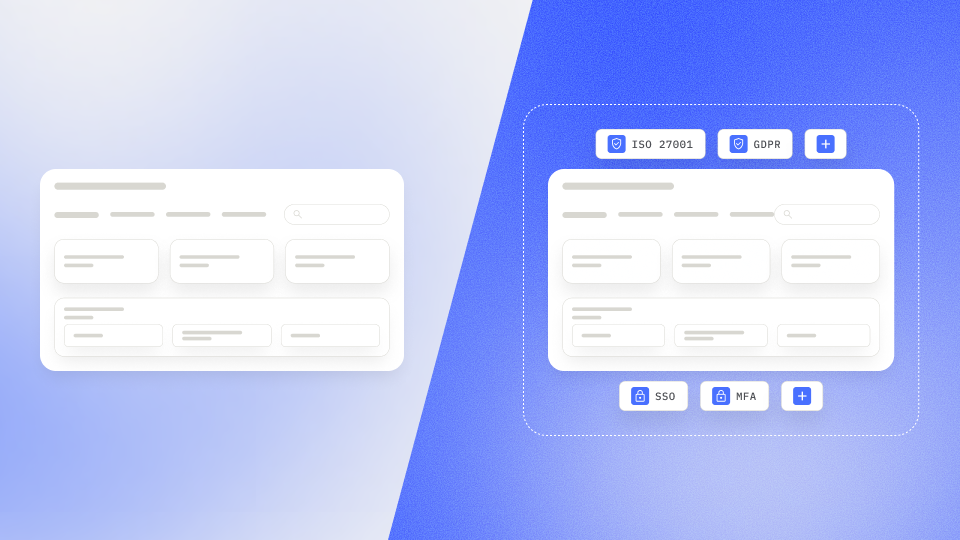
Ninox is GDPR and ISO 27001 compliant, so the governance question doesn't have to be answered later, after the app is already live and someone in legal is asking uncomfortable questions.
The stakes are getting higher
This isn't a niche concern that fades as the market matures. Gartner expects low-code platforms to become central to hyper automation and composable business strategy across 85% of large organizations by 2026, which means the governance question stops being optional for a shrinking slice of the market and starts being table stakes for nearly everyone building at scale. The organizations that solve it now won't get caught flat-footed retrofitting security onto hundreds of business-built solutions later.