
Most CRM software wasn't built for your business. It was built for someone else's, and you're expected to squeeze into it, work around its gaps, and pay for features you'll never use. The short version: a custom CRM built on a low-code platform gives you full adaptability, data ownership, and scalability, without the six-figure price tag or the twelve-month timeline of building from scratch. Lock down your requirements, choose a platform that bends to your workflows (not the other way around), import clean data, set access controls, and avoid the three pitfalls that derail most rollouts. The rest of this guide shows you exactly how.
Why your business can't afford to ignore CRM
Customer relationship management isn't a nice-to-have. It's the engine underneath every deal you close, every relationship you keep, and every opportunity you don't let slip through the cracks.
A CRM pulls everything into one place, customers, leads, deals, history, and does three things your business depends on: strengthens customer relationships, accelerates revenue, and fuels sustainable growth. Beyond that, a good CRM automates the manual work quietly draining your team's time, so your salespeople stay focused on people, not paperwork.
If you're serious about growing, a CRM isn't optional. The only question is which one, and how it's built.
Three roads to your CRM -Which one is yours?
A lot of teams start with Excel. It works, until it doesn't. When it stops working, there are three ways forward.
1. Buy off-the-shelf CRM software - The most common move. Subscribe, load your data, get going. Setup is fast and cloud backup is built in. But you're limited to what the vendor decided to build. You adapt to the software, not the other way around.
2. Build a custom CRM from scratch - Maximum control, maximum cost. Large enterprises with deep pockets and dedicated dev teams go this route. For most small and mid-sized businesses, the time, maintenance, and developer dependency make it more pain than it's worth.
3. Build your own CRM with low-code (the startup-smart move) - This is where the game changes. Low-code platforms give you the flexibility of custom development without the six-figure price tag or the twelve-month timeline. You get a foundation you can shape, extend, and own, without writing a line of code. Ninox sits in this lane. the low-code engine lets you push it exactly as far as your business needs.
Why a custom CRM is the unfair advantage you need
Off-the-shelf CRM tools are built for the average business. If you're not average, and most businesses worth building aren't, you end up paying for a bloated feature set while the things you actually need are missing.
A custom CRM flips that equation:
- Total adaptability. Every field, workflow, and view built around how you actually work.
- Full data ownership. You control what's stored, how it's secured, and who has access.
- Built-in scalability. As your team and processes evolve, your CRM evolves with them.
- Seamless integrations. Connect the tools you already use, on your terms.
- Smarter spend. Invest in exactly what you need, nothing you don't.
Yes, there's upfront effort. But the businesses that do it right stop fighting their tools, and start running faster because of them.
Build your own CRM: A step-by-step Guide
Low-code platforms like Ninox have changed the calculus here. You don't need to be a developer. You don't need months of runway. You need a clear picture of what you're building and a platform built to help you ship it.
Step 1: Lock down your requirements before you touch anything
Not all CRMs are created equal, and yours shouldn't try to be everything. Define what your CRM actually needs to do. What data lives in it? What workflows does it support? Who uses it, and how?
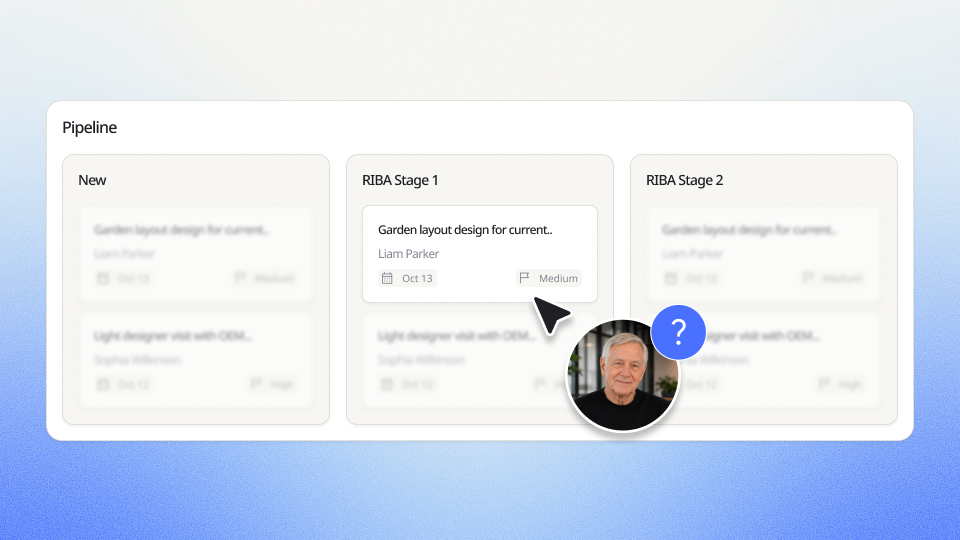
If you go the Ninox route, you're not locked into someone else's idea of what a CRM should look like. The platform gives you the building blocks to set up exactly the sales process your team uses, contact and company records, lead and opportunity tracking, pipeline views, role-based access, and reporting that pulls from live data. Email is connected natively, so communication stays tied to the record, not scattered across inboxes. And because it's all built on the same platform as the rest of your operations, your CRM doesn't sit in isolation, it's connected to everything else from day one.
Step 2: Choose your platform and make it yours
With Ninox, you're not choosing between a rigid product and a blank canvas, you get both. Describe what you need, and Ninox's AI-native builder helps you get there: your fields, your logic, your automations, without writing code or waiting on a developer.
One important note: bring your sales team into this process early. They're the ones who'll live in this system. Their input at step two saves painful rework at step five.
Step 3: Get your data in clean and complete
Your CRM is only as good as the data inside it. Import contact lists, leads, and opportunities manually or via CSV. If you're migrating from another system, map your existing data into Ninox's structure before you transfer.
Before you import anything: audit your data. Duplicates and inconsistencies imported now become problems that compound later.
Step 4: Set access rights and get your team aligned
Define who can see and edit what based on role, not guesswork. Proper access controls protect sensitive data while making sure everyone has what they need to move fast. Lock this down before you open the doors to the wider team.
Step 5: Avoid the mistakes that trip most teams up
Three pitfalls derail most CRM rollouts:
- Dirty data on day one - Clean it before it goes in, not after.
- Underinvesting in training - A CRM your team doesn't understand is one they won't use.
- Connectivity gaps - If your CRM doesn't talk to your other tools, you've just built a new silo. Map your integrations before you go live.
The bottom line: your business deserves better than "good enough"
The businesses that grow don't just buy more software. They build the right systems, ones that fit their reality, scale with their ambition, and don't force them into workarounds.
With a low-code platform like Ninox, you don't have to choose between speed and fit. You get a CRM that's ready when you are, customizable when you need it, and built to grow alongside your business. Stop settling. Start building.
See what Ninox CRM looks like for your business.
Let's figure it out together.